info@samratrestaurant.nl
 020-624-6033


Amsterdam is a city built on water, and its canals and rivers run far deeper than a scenic backdrop. They are pathways of life that recount tales of commerce, culture, invention and everyday back-and-forth. Strolling along these waterways offers a view of the city that feels simultaneously small and infinite — where narrow bridges provide frames for reflections of historical buildings, boats glide past houseboats just as quietly as if the canals were free of water, and the rhythm of the city slows down to an easy, almost meditative cadence.
Seeing Amsterdam by canal is one of the most gratifying ways to get to know the city. On foot, by bike beside the water, or just standing still to watch how light plays across its surface, the canals take you from neighbourhood to history to quiet pockets of respite amid raucous streets. After a day spent following these waterways, it follows with the need for rest and good food; Samrat Restaurant is a fitting place to end – somewhere where the comfort of a well-cooked meal marries nicely with the slow contemplative journey that starts by the water and brings you into the heart of London city.
This itinerary will lead you along the prettiest canals and rivers of Amsterdam — from the iconic Canal Ring to secret waterways and wide views over stately waters — in a day that is destined to turn into a perfect night out in Amsterdam Centrum.
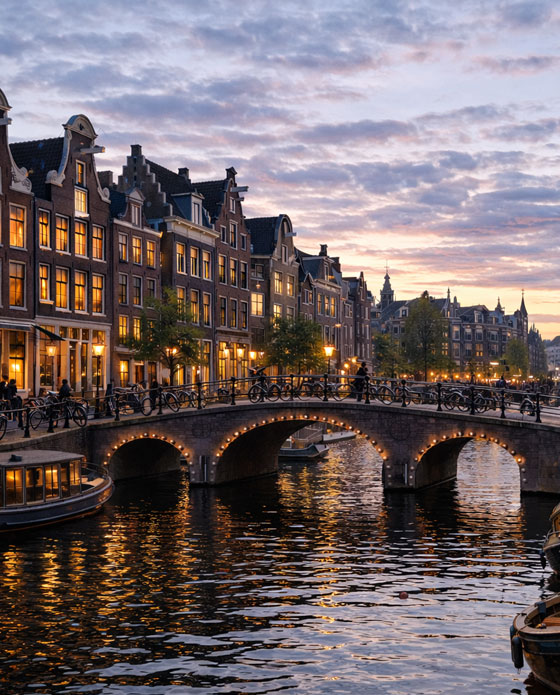
Amsterdam Seen from the Water
Amsterdam’s network of canals is one of the city’s most iconic accomplishments. A UNESCO World Heritage site, the canal is a testament to centuries of thoughtful urban planning, architectural ambition and economic foresight. Built during the Dutch Golden Age, they were built to not only look nice but also serve a purpose — helping trade routes, housing expansion and organised movement around a city that wouldn't stop growing. Their original function and beauty can still be seen today.
It is a perspective by the canals that somehow feels unusual for this city. The pace naturally slows. Narrow streets set with tall, historic townhouses impart intimacy, while the water provides equilibrium and calm. Reflections of bridges, boats and gabled façades drift subtly in the canal’s sway, transforming a walk into an abstracted visual meditation. It’s amazing to think that you are in the midst of such a busy capital, yet there is a calm and almost meditative feeling.
Exploring the canals isn’t about getting from point A to B; it’s about taking in the moments and scenery in between. You see small details — houseboats squeezed along the fringes, bicycles leaning on railings, cafes quietly purring nearby. As dusk approaches, these leisurely rambles inevitably work up an appetite for repose, talk, and comfort—and so catching a casual dinner at a convenient place like Samrat Indian Restaurant seems more like an organic progression than a premeditated destination. In Amsterdam, hours by the canals easily melt into a cosy, satisfying evening; good food and a tranquil setting say goodnight to the day as it should be said.
The Golden Canal Ring: Amsterdam’s Iconic Waterways
The heart of Amsterdam’s canal system lies in the famous Canal Ring, a masterpiece of 17th-century urban planning. These canals are among the most photographed and walked areas in the city, offering a perfect introduction to Amsterdam’s charm.
Herengracht
Herengracht is generally considered the grandest of Amsterdam's canals, both in terms of its history and scale. It was built at the height of the Dutch Golden Age and housed some of the city’s richest merchants, regents, and movers and shakers. The grand canal houses that line it with their fancy gables, decorative cornices and big front doors are enduring symbols of prosperity, aspiration and good taste from a transformative period in Dutch history.
Strolling down Herengracht, you get this sense of stiff upper lipness here; it's observed that everything is in place and under control. The canal is wider than many other canals, creating open sightlines and a balance between water, architecture and sky. It’s peaceful rather than being at all crowded, and you can fully appreciate the symmetry of the façades and the quiet confidence of it all. It’s a place where Amsterdam’s past riches are expressed with subtlety, proportion and detail rather than through grandiose excess.
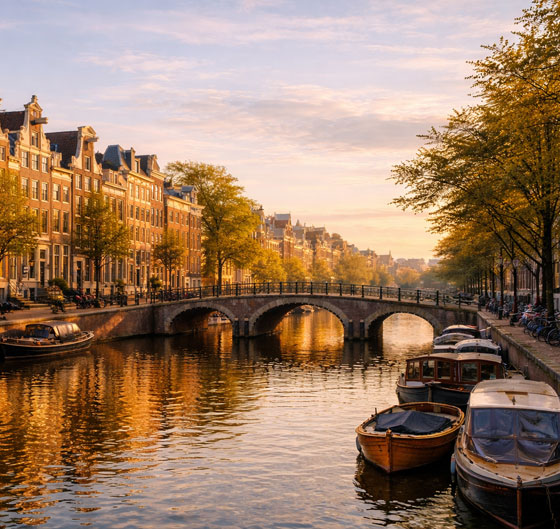
Herengracht becomes especially inviting. The soft sunlight that washes the brick in warm golden tones and catches architectural nuances also dances gently on the water. The city starts to decelerate, and the quieter side of the canal emerges. And it’s a perfect day to take a stroll, to look carefully and consider deliberately, when Amsterdam’s quieter, gentler face shows itself most fully.
Prinsengracht
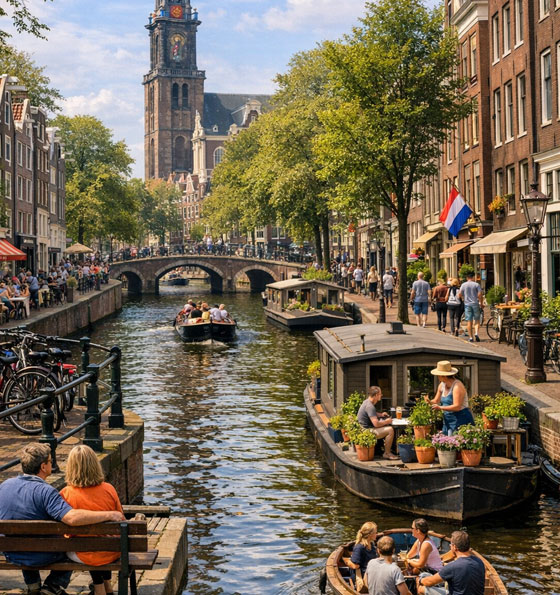
Prinsengracht is one of Amsterdam's liveliest and most personality-filled canals, the beating heart of the city's cultural identity. Wending across several neighbourhoods, it blends history, art and mundane urban life. Over its distance, you pass by a mix of historic buildings, floating houses and houseboats, small cafés, galleries and local shops that contribute to an environment with a great sense of openness.
What makes Prinsengracht particularly extraordinary is how seamlessly it integrates landmarks into daily life. The canal is a mix of crossing through established sights while remaining deeply residential, which gives it a balance that seems true to life. Little side streets empty onto the water, bikes line the railings and cafés lap gently onto the pavement, in a rhythm that reflects how locals actually live and move through the city.
A walk down Prinsengracht tends to turn into something other than a walk. It becomes a leisurely observation of local life — people conversing on benches, boats passing beneath low bridges, residents caring for houseplants on their houseboats. It is these unplanned, little moments that lend the canal its charm and make the city itself feel lived in, real rather than tailored to tourists. Prinsengracht doesn’t demand one’s attention; it commands it, through mood, action and quotidian detail.
Keizersgracht
The ‘Emperor’s Canal’, Keizersgracht, stretches out the widest of Amsterdam’s main canals and is at first sight striking for its space and visual impact. Their broad expanse of water provides long, continuous vistas that make it possible for the city to seem open and expansive as opposed to the narrow and more enclosed canals closer by. This generosity of scale gives Keizersgracht an understated majesty, easy and assured without being overpowering.
The elegance of the canal is muted by its environs. Vein-like groves of trees, sinuous bridge curves and well-placed historic buildings give a sense of life and evenness to the picture. These features break up the canal's expansiveness, so walking along Keizersgracht feels roomy and relaxed, rather than daunting. It’s a public space where architecture, water and greenery conspire together.
And as the day turns to evening, Keizersgracht is particularly soothing. The light is gradually dimming, the reflections forming and spreading across the water, movement just slows down from its normal pace. Walking here at this hour feels expansive and restorative, like a beat of quiet lucidity within the city, softening the shift between daytime exploration and an easy evening in Amsterdam.
Singel
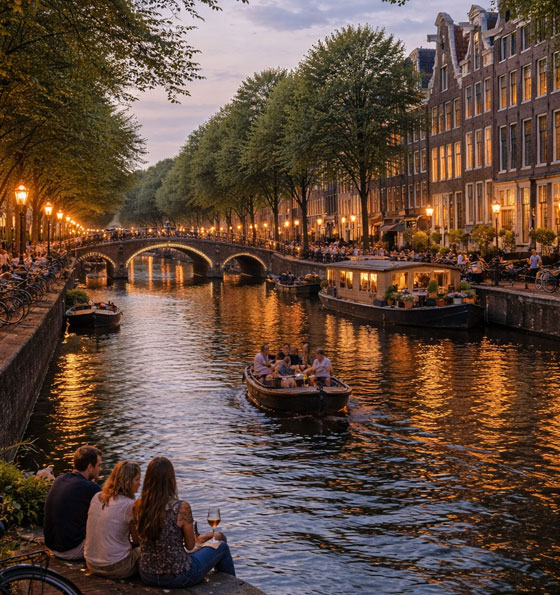
Singel is also a defining feature of Amsterdam’s past, as it used to be the medieval city limit, and later its enlargement formed what is now known as the canal ring. In comparison to the grandeur of its big brothers, Singel is a narrow and human-scale canal. Narrower waterways and close-set buildings contribute to a sense of proximity, which is also personal and quietly charming.
A stroll along Singel is a glimpse of the softer, more human side of the city. Flower stalls are bright and fragrant, small bookshops and independent stores tempt people in to browse unplanned purchases, and pockets of historic buildings live cheek by jowl with working life. The vibe is casual, non-threatening and feels home-grown: as if the canal belongs equally to the locals doing laps as it does to visitors discovering it for the first time.
Singel is also a natural divider in the city. It is a gently side stepping bridge between the energy of central areas and quieter residential neighbourhoods further away. Time spent here feels unstrained and unhurried, so this is the perfect canal for reflection and slow exploration.
Together, Herengracht, Prinsengracht, Keizersgracht and Singel introduce a natural rhythm in the day—from quiet to bustling, from wide avowals of openness to embroidered convolutions. By the time that final amble concludes, discovery has been fully supplanted by relaxation and the idea of sitting down for dinner feels perfectly timed and entirely earned.
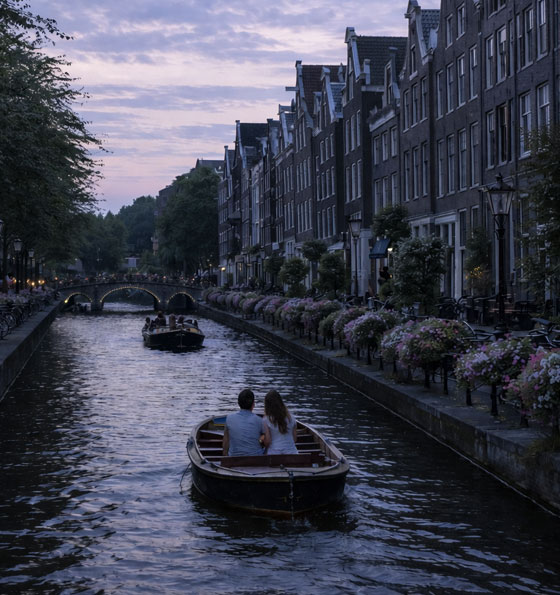
Picturesque and Romantic Canals
Beyond the main canal ring lie smaller waterways that are equally beautiful but often less crowded. These canals are favourites among photographers, couples, and those seeking quieter moments.
Brouwersgracht
Frequently cited as one of the most beautiful canals in Amsterdam, Brouwersgracht was workable because it was wide and open, and peaceful. Former warehouses line the canal, which was once a hub of trade and now houses converted homes. These solid brick structures are stories of the city’s commercial history mixed in with everyday life. Brouwersgracht feels calm and capacious underfoot, especially in the early evening when the sky shimmers lightly onto the water and the surrounding streets hush.
Leliegracht
Leliegracht is the stark opposite—narrow, delicate and quietly pretty. Bordered by classic canal houses and, in the warmer months, gussied up with flowering plants, it’s almost painterly in its arrangement. Its harmony of parts and understated tone seems to produce a quiet that summons measured haste and close attention. Time seems suspended here, like the canal is just outside the city’s rush.
Leidsegracht
The Leidsegracht is designed as a smooth transition between some of the largest canals, with views that change with each step and soft meandering curves that whisper, “Wander.” Though it connects busier parts of the city, the canal itself is peaceful and unassuming. Shifting vanishing points render it conducive to a stroll, as more of an in-between place than one you’d go directly to, but also with an enduring character that comes from motion and energy.
Groenburgwal
Groenburgwal: Possibly Amsterdam’s most lovely and picturesque canals, this one is known for its pretty bridge views and historic atmosphere. With a slight sense of enclosure, it’s intimate and a little pensive, inviting the viewer in with its symmetry and gentle mood. The calm water and the soft framing invite you to stay a while - to stand still, breathe in reflections, be with silence rudely juxtaposed by the city beyond.
To discover these romantic canals is to spend a day of silent beauty and considered tempo. Once the walks conclude, one naturally gravitates towards heat and shelter—to prolong the peace indoors, where the pensive atmosphere of the canals can easily settle into an unhurried and convivial evening.
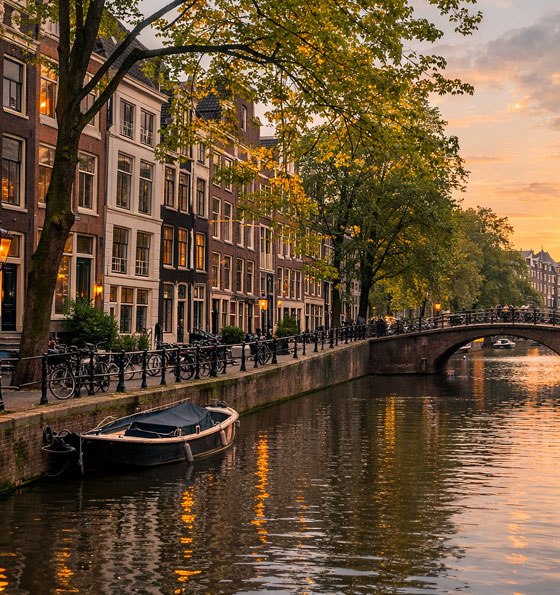
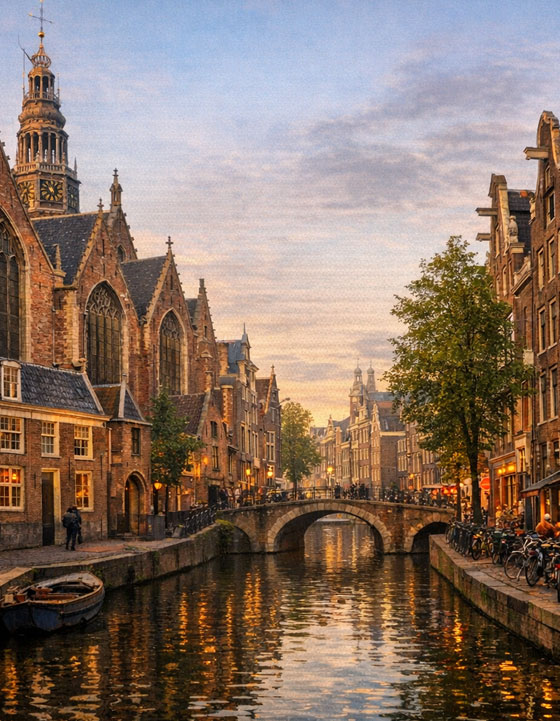
Historic Canals of the Old City
Amsterdam’s oldest canals reveal the city’s medieval roots. These waterways are narrower, more intimate, and deeply tied to the early development of the city.
Oudezijds Voorburgwal
Running through one of Amsterdam’s oldest quarters, Oudezijds Voorburgwal is the epitome of history and charm. Centuries-old buildings, historic churches and narrow side streets that show the city from its foundation line the canal. To walk here is to traverse a living archive, where traces of medieval and Renaissance architecture intersect with more modern layers. The air is heavy and textured, giving a vivid sense of how the heady power and poverty-stricken communities living in Amsterdam over seven centuries lived, worked and worshipped.
Oudezijds Achterburgwal
Running parallel to the Voorburgwal, Oudezijds Achterburgwal is much of the same but equally as real Old Amsterdam. This is one city’s organic expansion, less formally designed than shaped by everyday life, trade and evolving social needs. The world around feels gritty and true, so that you see how Amsterdam changed over time, but kept its physical footprint, its very essence. It’s the city at its best, proof that whatever evolves in this town doesn’t simply obscure history.
Grimburgwal
Grimburgwal is one of Amsterdam's smallest and oldest canulised rivers in the city. It is short and tucked away from major thoroughfares, as if hidden. Its hushed emptiness and tightly packed buildings make the square seem like a secret passage, a fleeting but indelible peek into Amsterdam’s most ancient form. Walking down Grimburgwal is as quietly, reflectively atmospheric.
Zwanenburgwal
Zwanenburgwal winds through an area where artists, philosophers and dreamers — including Rembrandt, for a portion of his life — used to live. The canal’s shape and quiet surroundings invite slowness, so a walk here feels contemplative rather than rushed. The reflections on the water and understated architecture give a mood that feels in polarity to the more busy streets just outside of its boundaries.
Behind these canals, the story of Amsterdam’s history is laid out plain — how the city began, how it grew, how that growth left elements visible today. This more often than not leaves visitors with a silent sense of appreciation for what lies beneath the surface - something that they are able to savour when the day slows, and when one can relax and take in the impressions of the city.
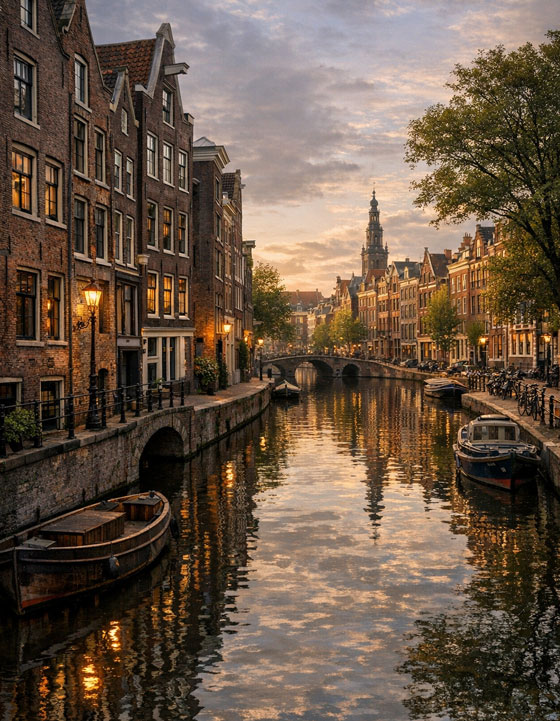
Eastern Canals and Cultural Routes
Moving eastward, Amsterdam’s canals widen and reflect the city’s role as a trading powerhouse. These waterways feel more open and industrial, yet still deeply atmospheric.
Schippersgracht
Schippersgracht is a crucial connection between Amsterdam's historic centre and its eastern districts. Living up to its name, the canal is a way to see the city’s long maritime history, as it used to be a passageway for ships and goods to travel in and out of the city. And walking along Schippersgracht gives huge, open prospects and a feeling of clarity as water, bridges and streets lock in place to guide you straightforwardly on your way. The atmosphere is purposeful but calm, which is fitting, too; the canal once connected the two parts of Amsterdam.
Nieuwe Herengracht
Nieuwe Herengracht is near many of the city’s major cultural and historical sites, but is more noticeably relaxed than the central canal ring. Its environs seem purposeful and expansive, enabling visitors to escape from the more packed thoroughfares and breathe. The canal encourages thoughtfulness — the still water, the sense of decorous building expressing an environment balanced and reflective.
Nieuwe Vaart
Nieuwe Vaart has a wider, more industrial look that represents the trading and shipping roots of Amsterdam. It is the size and openness that make it significantly different from the smaller canals closer to the centre. Walking here is expansive, not claustrophobic; it provides wide perspectives and connects you with a sense of the city’s working past. The experience is a reminder of the manner in which Amsterdam’s waterways were engineered not only for beauty, but also for commerce and mobility.
Rapenburgergracht
Rapenburgergracht combines the two, being both historically significant and a tranquil residential street. The canal feels like a place that’s been lived in, and is perfect for slowing down to witness daily life away from the tourist crowds. Its slower speed makes room for small, unsuspecting moments — passing pedestrians and changing reflections on the water — to assume centre stage as visitors experience a more honest, grounded version of the city.
Sarphatistraat Canal
Traversing the heart of the city, the Sarphatistraat Canal is an example of infrastructure combined with aesthetically pleasing views. It serves as a sort of connector amongst neighbourhoods with visual continuity between water, bridges and the surrounding architecture. The canal showcases Amsterdam’s utilitarian beauty, in which a sense of function and aesthetics naturally coexist.
Entrepotdok
Entrepotdok is a large, open canal surrounded by historic warehouses that once held goods from across the world. Today, the place is so laid-back and open that it’s a perfect setting for an airy stroll, less hurried and fraught with ambition as night falls. The breathability of the canal and its surroundings creates a sense of closure to discovery – space to contemplate the journey through Eastern waterways.
And after you’ve explored these eastern canals, the slow return to Amsterdam Centrum feels right and comforting. The transition from discovery to knowing brings with it a feeling of satisfaction — it makes the prospect of sitting down for dinner feel like coming home, a relaxed debrief after a day driven by water, and history and movement.
Rivers, Harbours, and Waterfront Amsterdam
Amsterdam’s waterways extend beyond canals to rivers and harbour areas that offer wide views and fresh air.
The Amstel River
The Amstel River is the lifeblood of Amsterdam (the city takes its name from a dam on the Amstel), and one of the city’s most tranquil and picturesque paths. A stroll along the Amstel gives you wide, open views, as though the city is exhaling. Houseboats bob gently up and down, bridges form long lines of sight, the water laps softly against the hulls, a rhythm more rustic than downtown, even though you’re in the thick of it. It's a space light, stillness and calm connection walk.
IJ River
Amsterdam is bordered to the north by the IJ River, and it has a quite distinct personality. Vast expanses of water and sky meet ferries, modern architecture and creative districts at the waterfront. The IJ is characterised by dynamism and a forward-looking spirit that reflects the changing aspects of Amsterdam as a city of history and innovation, potential harmony or discord. Walking here emphasises scale and openness, providing a fine contrast to the intimacy of the historic canals.
Westerkanaal and Westerhaven
Westerkanaal and Westerhaven, Holland. IPIntro Amsterdam: There’s also a Dutch side of town. These waterways seem quieter and more subdued, particularly as evening falls. Sea longshore would likely inspire stories of trade and shipping routes amid spicier light; the softer evening glow lends a meditative tranquillity. Here, walking is calm and contemplative, perfect for relaxing after a day of exploration.
Wittenburgergracht and Oostenburgergracht
Positioned in a once dockland area, the areas of Wittenburgergracht and Oostenburgergracht demonstrate how Amsterdam constantly renews itself. There are old maritime buildings mixed with new regeneration for an interesting mix of past and present. Strolling beside these canals uncovers layers of history while providing an unfettered, open vibe fostered by sensitive urban renewal.
Kattenburgergracht
The Kattenburgergracht has a strong connection with Amsterdam’s naval and maritime history. With its smooth surface, broad paths and open space around it, it’s the perfect last ride: leisurely. This place feels more stable, closer to the ground, a day meant to slow itself down before darkness takes over.
Having been walking along riverbanks and harbour canals, the expanse of water makes you long for something warm and cosy. It is back from vast horizons to a hospitable table, and dinner at Samrat Indian Restaurant could not be more of a settling end. Following a day of water, space and movement, getting down with your favourite Indian take-out place rounds things out—exploration becomes comfort, and reflection turns into satisfaction.
From Canal Walks to an Evening Meal in Amsterdam Centrum
After drifting daylong through the canals and their endless corners, Amsterdam Centrum provides the only sensible destination at which to disembark. It’s where routes converge – where towpath walks intersect tram-lines, and suburban streets end in busy but familiar main roads. The shift feels natural, from exploration to familiarity and routine.
Situated near Dam Square and a number of the main canal routes, it's especially useful for those returning from around the city. No matter where you are coming from – the Canal Ring, Amstel or eastern docklands – getting here is easy and somewhat obvious. Located in the centre, it gives an easy, central meeting point after hours of walking and exploring.
The mood here dials down a few notches as the evening goes on. The energy does not dissipate, but rather softens; people start to talk more quietly and move at a more relaxed pace. The Amsterdam Centrum doesn’t feel uninviting as much as unhurried: A place for pause. It’s the perfect place to sit and consider impressions of the day over a hearty evening meal, ending a relaxed but busy day on – and off – Amsterdam’s waterways in peaceful style.
Why Canal Exploration Makes Dinner More Enjoyable
Just riding in a canal through Amsterdam is an experience for all the senses. The delicate trickling of water under the arches of bridges, the regular thumpon-pavement and the gentle lapping of light against brick walls and glass-paned windows are all just enough to remind rather than bombard. Slower than most tourist sightseeing, canal walks reward presence and consciousness, allowing the city to reveal itself at a more leisurely pace.
By the time the evening comes, you and your body have already headed for relaxation:
- You have walked enough to be pleased with being tired, which gives your natural appetite a relish.
- You’ve seen the essential — historical streets, hidden canals, and everyday life — to start conversations.
- You’re prepared to sit, slow down, and experience comfort without distraction.
Dinner emerges as more than a mere necessity at this point. That it turns into the day’s close — where impressions are stilled, stories are exchanged, and the city’s dynamism softens into something warm, personal. Savouring that time at Samrat Restaurant provides a logical extension of the canal experience, as though a day of motion and discovery has been turned into the calm, satisfying endpoint where you sit for hours after your meal is through.
A Perfect Ending to a Day on the Water
The canals and rivers of Amsterdam are the city’s lifeblood, not just a picturesque backdrop. They determine how Amsterdam moves, breathes and reveals itself. Transiting these waterways provides a genuine perspective of the city, from languid trips through elegantly arranged canal rings to discreet back-alley lanes and sweeping river views. Each body of water has a different story to share, and together they set the rhythm for Amsterdam.
As the day draws to a conclusion, having an evening meal out in Amsterdam Centrum to finish things off is satisfying. It is the moment between stepping and sitting; between looking and thinking. After a day’s worth of moving through the city, sitting down takes a turn in becoming part of the journey — time to stop and unwind, reflect on all that transpired during the day.
Whether your path has taken you along the stately curves of Herengracht, across the bridges of Brouwersgracht, beside the calm flow of the Amstel, or along the wide horizons of the IJ, the desire at day’s end is the same: comfort, warmth, and familiarity. That final chapter comes together naturally at Samrat Restaurant, where the calm earned through canal exploration continues indoors. It’s not just dinner—it’s the moment when a day on the water settles into memory, right in the heart of Amsterdam.