info@samratrestaurant.nl
 020-624-6033


Amsterdam is a city that lends itself to slow encounters. And this comes out not so much within the walls of its museum or by way of its famous canals, but in the open spaces where life just unfurls—vibrant squares and grand plazas and neighborhood markets, and leafy parks that gently set the pace for the rest of the city. From early mornings perusing vibrant markets, to leisurely afternoons sprawled under trees, and evenings lit by squares and conversation, the public realm of Amsterdam leads us through an entire urban experience.
After hours spent going back and forth between the city's most boisterous squares and its quietest green retreats, the day tends to call for a soothing close. Dinner in the city center, and that will be that, the last nail home. In the passage between swift motion and arrested stillness, it is a place like Samrat Restaurant that blends so well into that continuum of being—providing warmth, solace and nourishment without challenging the mood of the day. It's here, about a leisurely meal that first impressions coalesce, the experiences of the city cohere, and Amsterdam is not simply visited but also experienced.
From its famous squares and green spaces, this guide leads you through the best of Amsterdam's key squares, plazas and parks to demonstrate how logically they are linked together and explain why a day strolling around them naturally flows into an evening of good cheer in Amsterdam Centrum .
The Historic Heart of Amsterdam: Squares That Tell the City's Story
Amsterdam's oldest squares form the backbone of the city's identity. These are places where history, commerce, and daily life have intersected for centuries, creating spaces that feel timeless yet alive.
Dam Square
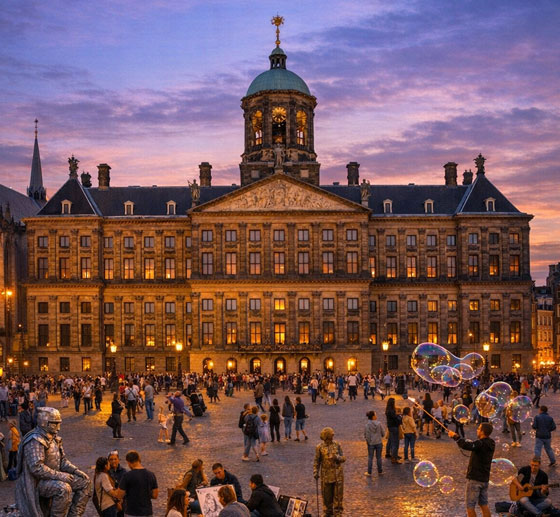
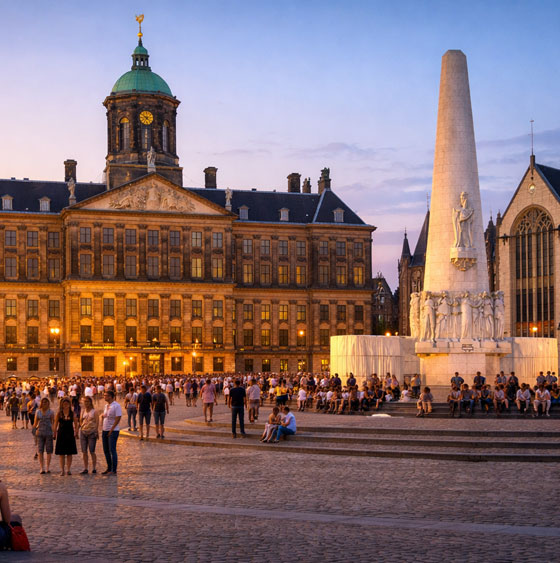
Dam Square is the place where Amsterdam's tale quite literally started. Constructed along the original dam in the Amstel River (which itself led to the naming of the city), this space has been a political, social and symbolic center for centuries. From royal processions and national festivities to street demonstrations and convivial markets, Dam Square throughout the centuries has mirrored Amsterdam's mood.
The square is presided over by the Royal Palace Amsterdam , evidence of the city's wealth and power in its heyday during the Dutch Golden Age. The building, originally built as a city hall, is also symbolic of the time Amsterdam shifted from being just a trading center to becoming a global power. Its street artists, as well as its visitors and city dwellers, wrap all around, making for a haunted scene that's never still; it changes with the hour of the day and volume of people.
For a lot of tourists, this is their first taste of Amsterdam. It serves as something of a prologue to exploration, providing scale, history and energy in one fell swoop. From there, narrow streets fan out towards shopping areas, historical canals and quieter neighbourhoods, which makes the square an obvious point of orientation.
The nature of Dam Square evolves in a subtle way throughout the day. The harshness of the afternoon light is replaced in the evening with a softer, pensive glow. This slow shift in locus makes it the perfect epicenter for a day that spreads out and then ebbs back towards the city center, where things decelerate, impressions solidify, and dinner comes to a close with dessert.
New Market
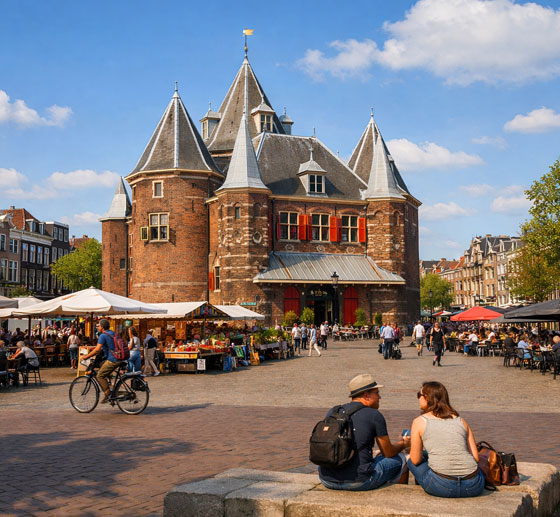
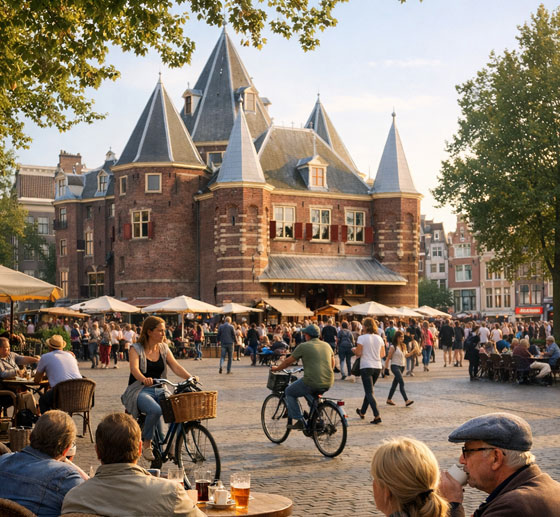
Nieuwmarkt is a mere stroll from the main heart of Amsterdam, but mood-wise it's already noticeably another world: calmer and more local. Originally, the edge of the medieval city, with De Waag as a city gate and later the town hall of the guildhouse. That layered history still shapes the square today.
Nieuwmarkt is now cool, laid-back and lively. Frames of cafés and restaurants surround the open area, staring off at daytime markets that attract both locals and visitors, cutting through to nearby neighbourhoods. The vibe is social but not intrusive; active, but not rushed.
In contrast to the crush of Dam Square, Nieuwmarkt has a more leisurely pace. It invites people to sit down and watch the day-to-day activities of the city evolve. Chatter floats over terraces, bikes pass unhurriedly, and the history is more about continuity than spectacle.
Nieuwmarkt is the sort of place where time expands softly. It functions as a midpoint between the two — close enough to feel connected to the city’s energy, but far enough from its busiest streets and neighbourhoods to feel serene. That equilibrium heightens its appeal as a backdrop for slowly sinking into the day’s rhythm, quietly roiling with anticipation of what is to come.
Waterlooplein
Waterlooplein is one of Amsterdam’s most characterful squares, and best remembered as the site of its long-running flea market. Here, history and invention converge in an environment that's informal, spirited and unmistakably local. Market stalls flood the square with countless antiques, vintage clothing, books, records, furniture and tools, as well as rare treats and surprises that never disappoint even the most casual treasure hunters.
Diversity is the mood at Waterlooplein. It’s always entertaining, as locals shopping for everyday clothes mingle with students, artists and people just showing around the visitor-looking-for-local-fare. No two visits feel the same, and that sense of discovery is indicative as well of Amsterdam’s wider openness and diversity. The square has forever been about exchange — not just of goods, but also ideas and styles, stories and songs.
But more than shopping, Waterlooplein is about wandering and talking. People stop to look at things, compare finds or just watch the market go by. Time passes easily here, directed by curiosity rather than schedule.
"As for getting hungry? Spent part of the day at Waterlooplein can whet an appetite—both physical and mental. After all that browsing, walking and talking, dinner is well deserved. The shift from marketplace energy to casual dinner party complete the experience, allowing a day of exploration to end in satisfyingly unhurried fashion.
Spui and Het Spui
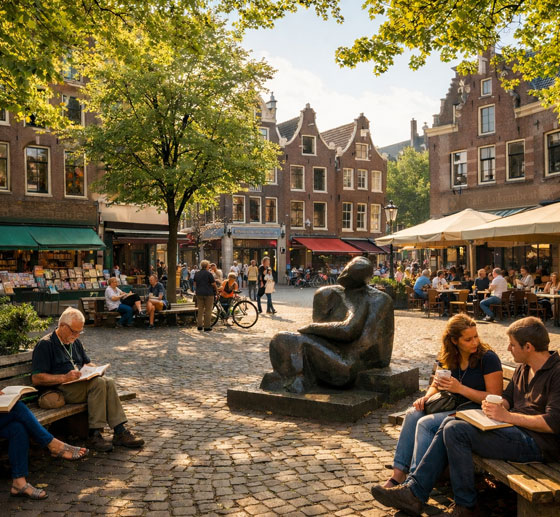
Het Spui, referred to as Spui for short, is a square of literary and cultural significance situated modestly behind the shopping streets in central Amsterdam. For being in the heart of things here, it's very reflective, almost meditative. For generations, the square has been a magnet for writers, thinkers, students, academics — helping to make its name as a place where ideas have mattered as much as movement.
Lined with bookshops, cafes and academic institutions, Spui is a place that invites loitering rather than hustling. There are benches where people sit with books, notepads or coffee, talking or just watching the city pass at a more manageable clip. That space, however, reads as intimate and human-scaled, providing a contrast to the commercial force of nearby streets.
It helps that Spui is perfectly designed for an afternoon break. After hours of trudging around louder, bustling parts of Amsterdam, the square is a place to pause and look. It gives guests a chance to refresh themselves before the night gets going and offers a seamless segue from daytime discovery into quieter, more contemplative nights.
Koningsplein and Amstelveld
Koningsplein is the overlooked spot between Amsterdam’s main shopping streets and its canal rings, likely passed when walking between bigger sights. Its impact is more suggestive than explosive. People pass through, stop for a moment or two of calm or press it as an intermezzo between duelling stretches of the city. The square shape seems utilitarian and unflashy, and does the job without asking to be noticed.
A few minutes’ walk away, Amstelveld is a different type of place. With its open design and encircling residential buildings, it’s almost like a village square that someone put there carefully in the middle of the city. This is where locals gather to sit, chat or just relish the openness. Its pace is leisurely, its mood relaxed, and the space feels lived-in rather than cultivated.
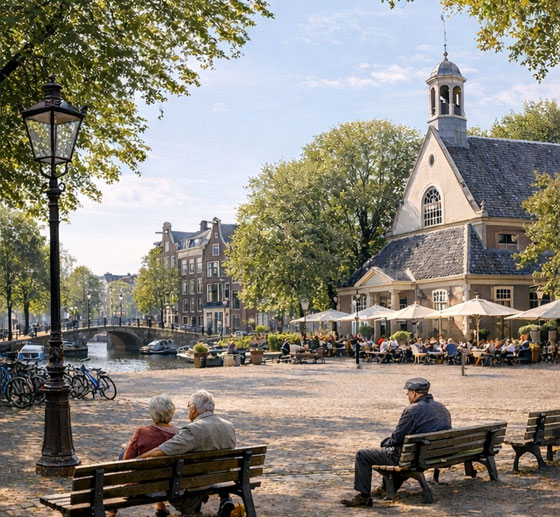
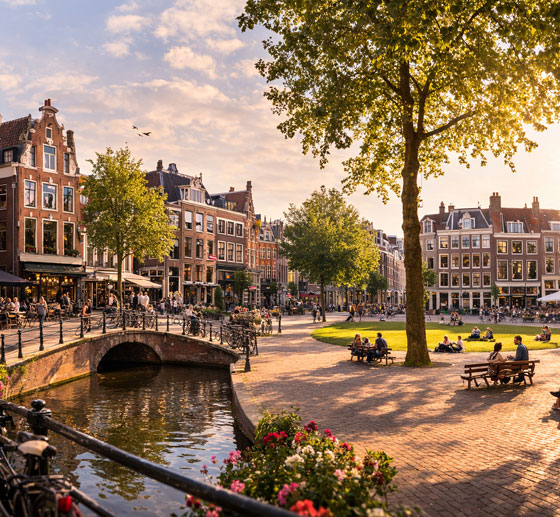
The beauty of Amstelveld is its simplicity. There is space to breathe, to watch daily life and to get away from the visual blast of Amsterdam’s grand landmarks. It is a reminder that meaningful places don’t necessarily require monuments or crowds — sometimes the space is enough.
Koningsplein and Amstelveld complement each other. They slow the city’s tempo, providing counterpoint to famous squares and tourist-crowded zones. These community spaces provide a quieter layer of Amsterdam; they further the notion that maybe this city’s real magic comes not from its landmarks but from those understated, everyday places where life fills in the gaps.
Entertainment, Energy, and Evening Life
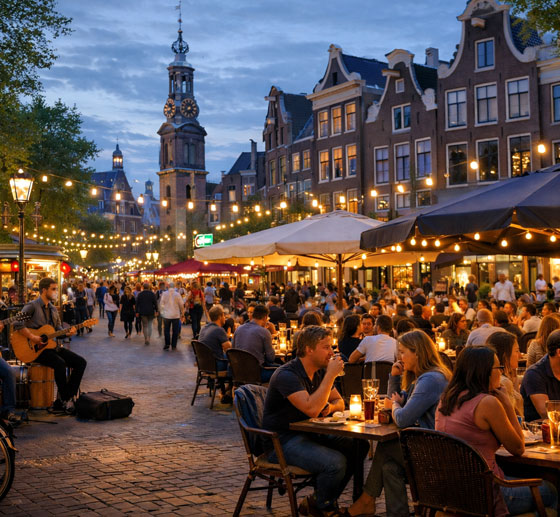
The social spirit of Amsterdam is well in evidence as the day progresses. Afternoon slides quietly into evening, and placid squares come to life with sound, motion, and conversation. Laughter fills terraces, music wafts through the public areas, and crowds form naturally—all different facets of a city that is proud to boast its joie de vivre.
These are the moments that show where culture, nightlife and everyday community life meet. Public spaces are now seen as stages to be interacted with, not observed, kicking off the last active chapter of the day before everything starts winding down. Soak in some of this energy, and most visitors, understandably, will long to find a corner where the atmosphere relaxes and the rhythm quiets. And in that transition, plopping down for dinner at Samrat Restaurant doesn’t feel like a shift of scenery but something closer to the next step — toward comfort and calm once the city’s evening buzz has played its part.
Leidseplein
Leidseplein equals entertainment and show. The theatres, clubs, cinemas and cafés that surround the square ensure there’s always something happening here from midday to late into the night; whether it be some sort of performance or simply a gathering place for spectating. Buskers command small groups, music competes for space in the open air, and people stop as though they’d been hit by a spell — all of it combines to give Leidseplein a buzzy, energetic vibe.
Leidseplein is passed by many visitors on their way to and from cultural events or music venues to the park. Another reason that atmosphere can become people’s favourite is that it gives an exciting, if occasionally wild, intensity. As is often the case, once you’ve spent even a little time here, your mind tends to wander to something more serene — somewhere with less din, where conversation doesn’t compete with music and bodies.
Rembrandtplein
Rembrandtplein reflects Amsterdam’s social confidence. During the day, it feels open and inviting, with its cafes and terraces providing room to breathe. But by night, it takes on one of the city’s liveliest nightlife sectors.
Here, friends gather at icebreakers to start the night, bars fill up, and the square takes on life with movement and noise. The energy is infectious, yet it’s a pretty fast pace. After the bustle of Rembrandtplein, a more sedate spot for dinner (Amsterdam Centrum) It feels almost like another side to Amsterdam; if you've just come from that area, then this one will bring back balance.
Muntplein
Muntplein is located at the crossing of several canals, shopping streets and pedestrian paths. Situated near the floating flower market, it attracts people in possession of time as they trape from one place to another. It’s not there to entertain so much as connect.
As a gathering place, the transitional quality of Muntplein is palpable. Few visitors stop for a quick second to either orient themselves or plan their next destination. This makes it a crucial connection between daytime excursions and evening plans, especially for visitors walking the city.
Marie Heinekenplein
Marie Heinekenplein embodies a younger, hipper side of Amsterdam. A stone's throw from the Museum Quarter and inside the De Pijp area, this is a mix of student life, relaxed cafés and contemporary city living.
The square is informal and social rather than touristic. Daytime museum visits naturally flow into early evening soirees here, where people gather with friends and let downtheir hair informally. It’s Amsterdam at its latest and greatest — relaxed, chummy and effortlessly cool.
Max Euweplein
Very close to Leidseplein, and crossing cultural attractions with nightlife is Max Euweplein. Its facilities - with exhibitions, cinemas and open public space – make it a magnet for all comers.
The square functions as a transition zone: It is busy enough to make you feel like you are in the midst of things, but not so open and energetic that it feels intense. For others, it’s a last stop before the journey back to civilization is resumed, and activities turn into relaxation.
The Cultural Open Spaces of Amsterdam Zuid
Amsterdam Zuid is known for its wide avenues, cultural landmarks, and open squares that blend city life with breathing room.
Museumplein
Museumplein is one of Amsterdam’s best-known public spaces and is naked on the city’s cultural scene. Surrounded by world-class museums and sprawling lawns, it is at once a symbolic landmark and a working public square. Visitors spread out on the lawn, pop in and out of outdoor exhibitions or seasonal events, and generally take a moment to appreciate both the scale and energy of their surroundings.
Museumplein is an open space which feels liberating after the confinement of galleries. It’s an invitation to linger, rather than rush, and it makes for an excellent pullover-the-horses-for-a-minute spot. Visitors who have spent an extended amount of time in the area naturally look forward to leaving the Museum Quarter behind and returning to Amsterdam Centrum, where dinner brings comfort and peace far from the teeming crowds.
Stadionplein
Stadionplein epitomizes another side to Amsterdam Zuid— one characterized by sport, movement and modernist urban design. With its wide boulevards, straight lines and the surrounding architecture, it has an inviting modern feel that is very different from the historical heart of Ljubljana.
The square feels purposeful and roomy, with good sightlines and breathing space. It’s a testament to how Amsterdam intentionally grew outward, with an eye toward practicality and aesthetics. When in Stadionplein, you actually gain a good sense of how the city works on redeveloping breadth rather than depth.
Albert Cuyp Market Square
The space around and surrounding Albert Cuyp Market is one of the liveliest spots in Amsterdam during the day. Lines of stalls hawk fresh produce, street food, spices, clothing and everyday wares in a cacophony of sights and smells that amount to a dense sensory experience. Colours, sounds and smells clash all around, evoking the diversity and bustle of city life in a single block.
Navigating the market is all-encompassing and full of life, and it’s also hard work. By the time visitors get out, they are typically happily tired, stimulated, satisfied and ready to slow down. This makes the concept of a restful evening with a sit-down dinner sound particularly intriguing: in short, a nice antidote to the motion and tension of the market.
Green Escapes That Shape the Day
Amsterdam’s parks offer a soft counterweight to the city’s bustle and cultural weight. They are sites to lounge, stroll, picnic and reconnect with nature — without leaving the urban landscape. These patches of green set the rhythm of the day, providing moments of pause that allow the city to be liveable and humane and in balance.
Vondelpark
Vondelpark, Amsterdam’s most famous park, plays a major role in the daily life of its residents and visitors. Wide walkways weave through ponds, lawns and stands of trees, offering space for jogging, cycling, picnicking, or just sitting and observing the world in motion at one end or the other.
What sets Vondelpark apart is the collective pursuit of leisure. Musicians perform informally, families unfurl blankets and couples meander without a sense of urgency. It gets social here, yet mellowed; active, but not forced. This time is normally a high point of the day; it gives necessary ballast to my experience.
Following hours in Vondelpark, the move to the city centre is particularly gratifying. The tranquillity of greenery gives way, quite naturally, to the gratification of dinner, which makes the day feel full rather than cruelly cut short.
Rembrandtpark and Westerpark
Close by is Rembrandtpark, with its open space and tranquil walking paths; you will not find crowds here, just quiet movement. Its open design is conducive to decelerated exploring and introspection, for locals and visitors alike, drawn to the understated surrounds.
Westerpark merges green space and cultural life. New life has been breathed into the former industrial buildings, giving visitors a sense of leisure and the city at once. It is also an example of how Amsterdam weaves green space back into the everyday life of the city rather than segregating it.
Between them, the parks reveal how recreation, imagination and ordinary life flow together.
Sarphatipark
Located in the centre of De Pijp, Sarphatipark is a local gem. Smaller and more intimate than Amsterdam’s big parks, it feels personal and welcoming.
Residents relax here for the midday break, parents bring their children, locals come to sit in coffee shops or read books. Sarphatipark is most useful as an interlude, not a destination — the ideal place to recalibrate the rhythm of the day before continuing.
Amstelpark and Oosterpark
Amstelpark has landscaped gardens and walking paths that feel thoughtful and peaceful. It resonates with people who like structure, simplicity, a gentle beauty and thoughtful design.
It’s less of a city park than an open, natural Oosterpark. It is cosmopolitan, lively in parts, and a microcosm of the local communities. Both parks allow time to relax and refuel, in their own way, before evening plans commence.
Flevopark and Beatrixpark
The Flevopark is waterfront and has long, silent trails for uninterrupted walks. Its relative location away from the main tourist access routes means it attracts those looking for peace and quiet.
Beatrixpark, by contrast, feels sophisticated and stylish. That, with its tidy paths and its peaceful demeanour, tends to draw people who also belong to that breed which prefers subtlety and order to certainty of activity.
Both parks are evidence that the green spaces of Amsterdam are not homogeneous — they’re designed for different moods, moments and ways of experiencing city life.
These parks, taken together, form the rhythm of an Amsterdam day. They soften the city’s energy, provide space for reflection and ease the transition into the evening. After a day spent in these green refuges, dinner feels less like the end of an itinerary and more like a proper conclusion.
Markets and Neighbourhood Squares
Some of Amsterdam’s most authentic experiences happen in its neighbourhood squares and markets.
Noordermarkt
Noordermarkt is among the best spots to observe everyday Amsterdam at a leisurely pace. (Famous for its farmers’ markets and robust local presence, it’s also where locals from the neighbouring Jordaan neighbourhood go to buy fresh produce, baked goods, flowers and organic items.)
Visiting in the morning or early afternoon provides a window into daily life, rather than tourism. The chatting between vendors and regulars, the cadence of shopping, and the lack of fuss all create a grounding ethos in community. The classic taste and easy routine have been mostly consistent throughout the years in this market.
Aside from shopping, Noordermarkt is also a place to socialize. It is a place for hanging out, swapping gossip and moving freely between market stalls and nearby cafés with all the conviction that this square belongs to the neighbourhood.
Albert Cuyp Market Square Revisited
Come back to Albert Cuyp Market in the afternoon, and it’s a different place. In the mornings, it seems to be all about trade and movement; come later in the day, though, attention shifts to what a social and cultural hub the place is. It shifts from a market of buying to one about atmosphere, interaction and energy.
The sounds, the smells and the same mix of people really encapsulate the variety of Amsterdam in a simple package. Residents, scholars, families and tourists mingle seamlessly, offering a street-level snapshot of the everyday vitality of the city at large. Street food vendors, chats and bikes whizzing by maintain the feeling of perpetual movement.
Viewed in this light, Albert Cuyp Market is not merely a place to shop; it is the mirror of the city’s personality. It’s an introduction to how public space in Amsterdam cultivates openness, connection and shared experience – making markets and neighbourhood squares vital spaces for unlocking the city’s true essence.
Bringing the Day Together in Amsterdam Centrum
There’s no better place to end the day than in Amsterdam Centrum, winding up ambling through old squares, local plazas, cultural quarters and green parks. As the city’s connective tissue, it connects Amsterdam’s intimidating cluster of neighbourhoods via walkable streets, efficient trams and a web of canals that makes getting across town feel instinctive instead of exhausting.
Bethaniëndwarsstraat, near Dam Square and the main canal routes, is particularly convenient for visitors who plan to return from other parts of the city. Whether the day started in Vondelpark, went around Museumplein, came through Rembrandtplein or discovered what the market-centric pace of Noordermarkt is, all roads lead back to this part of town easily.
Evening is setting in, and the rhythm of life is slowing down, as it should. Some of the pressure of crowds and schedules has eased here, and in its place is a calm, settledness. This change beckons men and women to stop rather than hurry on – take a seat, ponder over the day, relax with a leisurely meal.
It is the hour for Amsterdam Centrum, depending on the sort of traveller one happens to be. Couples spend time in quiet contemplation, contemplating shared memories, families relax after long walks and full itineraries, and friends meet up to share tales as they figure out where the night’s going. It is where your day consolidates, not as details on a checklist but as memories that feel round and connected and unforced.
Why Ending the Day with Dinner Matters
The squares, parks and neighbourhoods of Amsterdam are vibrant, active spaces. The city encourages perpetual motion — walking beside canals, hopping through bustling plazas, stopping in green parks and soaking up layers of history and contemporary life. By the end of the day, you deserve space to savour those impressions. This is why a carefully thought-out dinner is so important.
Relaxing dining curbs an otherwise high-energy schedule. It makes for a seamless change from being out and about to slowing down both body and mind. Instead of dinner being seen as a practical requirement, this way of eating makes it an intentional break that clarifies the rest of the day.
A relaxed evening meal offers:
- Time to desensitize after hours of walking and stimulation
- A place for thoughts and conversation to flow, where the day can be unwound and digested
- A quiet retreat from city life, exchange noise and movement for a moment of peace, and its cover can be opened to let in light.
- One of wholeness, a great punctuation on the day’s travels
Here, food means more than sustenance. It's the last experience of our day – and one that makes everything else come together. Long after the walking has ceased, the scenes have dulled, it is often this silent contemplative moment that lingers longest in one's mind, centering memory of Amsterdam not as a place observed but as a place felt.
A Perfect Ending to an Amsterdam Day
Amsterdam shows itself in opposition. Busy plazas and tranquil green spaces exist side by side in a packed city, forming a tempo that evolves effortlessly from one hour to the next. From the vibrant frenzy of Dam Square to the peaceful, empty ribbons of Beatrixpark , from raucous markets to neighborhood squares where residents while away time, each place adds a unique layer of feel.
These are not just waypoints on an itinerary, but points at which the city feels something. Lively squares reflect Amsterdam's self-assurance and its social vigour, while parks and calmer streets allow room for a moment of pause or harmony. Between them, they expose a city that effortlessly shifts from being wide awake to soothingly relaxing, staring and shooing.
This equilibrium naturally concludes with dinner in Amsterdam Center. As the heart of the city, the center presents an alternative pace for a night – one where ideas have time to percolate, and conversations can breathe. Here, Samrat Restaurant becomes an easy part of the flow of your day – offering a comfortable and welcoming space as you move from adventure to relaxation.
And while your day might have been spent strolling through quaint historic squares or lounging in lush parks or soaking in the buzz of Amsterdam's thriving social scene, the conclusion arrives quite naturally — and satisfyingly so. But at the heart of the city, the evening is a time to lighten up, connect and linger with Amsterdam in a softer, longer-lasting way.