info@samratrestaurant.nl
 020-624-6033


Amsterdam is a place that unveils slowly. As much as its museums and landmarks are the stuff of headlines, the real spirit of Venice resides in the streets – long canal-side thoroughfares, tiny historic alleyways, waterfront promenades and neighbourhood passages that compress centuries of movement, trading and living into a human scale. Strolling through Amsterdam isn’t just about going from point A to point B; it’s a way to experience the city, gradually and at a pace where its character emerges on its own.
From elegant canal streets framed by grand merchant houses to quiet backstreets where history seems as if it whispers out of every brick, Amsterdam’s streets chart the passage of time. They bridge neighbourhoods, cultures and stories, pointing to how the city has expanded, evolved and transformed while being resolutely human in scale. Each walk adds texture to the day — fleeting encounters, shifting moods and peaceful interludes between busier periods.
One of the greatest simple pleasures, after a day walking these historic paths, is to have an easy, satisfying meal in the middle of everything. This natural progression of action to stillness is how the experience is rounded off, and new memories are given room to settle. Wrapping that journey up at Samrat Restaurant is instinctive — a pleasant interlude in Amsterdam Centrum, where the same day of exploration, wandering and watching suddenly makes sense as an ideal evening endnote.
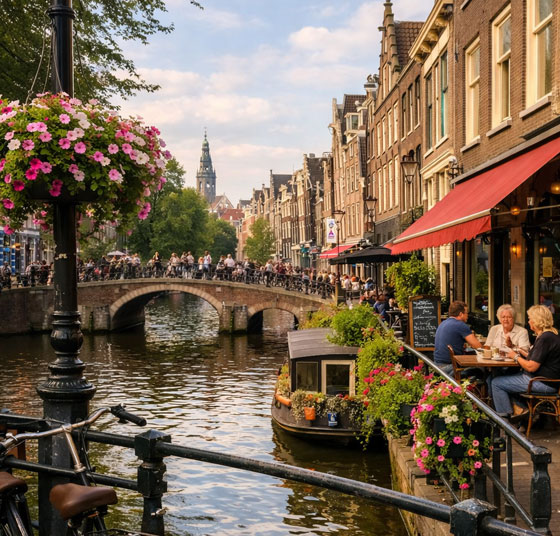
Discovering Amsterdam One Street at a Time
Amsterdam is a walking city. Its small footprint, grid of streets, and ubiquitous canals make it suitable for aimless wandering at a leisurely pace. Walking feels organic here — streets become bridges, canals and small squares instead of grids, where architecture, light and daily life determine a street’s character. You never feel like you’re walking the same street again, and for someone who finds the city as gratifying as rewarding, that diversity is invigorating.
There’s room to notice the details that are so often missed when you’re walking around Amsterdam. Reflections ripple gently in the canal water, bicycles lean against iron railings with nonchalance, and flowers cascade from windows and houseboats. You enjoy snippets of conversation on the street, smell fresh coffee from the café on the corner and see heritage buildings living side by side with contemporary life. Through conversations, this really comes through - the streets are living museums, which bring the stories of centuries past unashamedly into the here and now, not preserved or tucked away but open to all.
The rhythm of walking provides a sensitive and yet intuitive measure of the day. Morning exploration leads to afternoon forays, when time feels elastic, and the city is full-on open. By the time evening rolls around, that continuous rhythm creates an organic inclination to slow down — sit back with ease, rest those tired legs and take pleasure in something good to eat without a press of time. Amsterdam’s streets are ideal for this sort of trip, after all: one in which experience trumps speed and the goal is not haste but comfort and quiet fulfilment.
The Grand Canal Streets of Amsterdam
At the heart of Amsterdam lies its world-famous canal belt, a network of streets and waterways recognised as a UNESCO World Heritage Site. These canals are among the most iconic streets in Europe, offering elegance, history, and timeless beauty.
Herengracht
"The most prestigious of the canal streets is Herengracht, not only for its history but also because of how it looks." Constructed at the peak of the Dutch Golden Age, it is where the city’s wealthiest merchants, bankers and civic leaders once resided. The canal is graced with lovely 19th-century townhouses, some of them the sort with formal façades and heavy windows and just proportions that suggest an era in which its residents had abundant confidence and wealth.
The walk along Herengracht is smooth, leisurely. The canal’s width is open-handed, providing long views across the water that allow the street to feel large even though it sits within walking distance of the city’s centre. Quiet elegance informs how the buildings lift from the edge of the canal, countered by water and sky. The ambience is tranquil, despite the central setting – a relaxed foil to Amsterdam’s hustle and bustle.
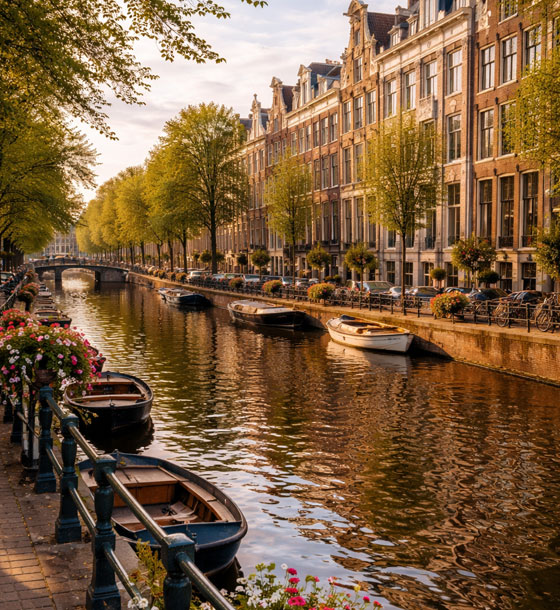
Herengracht is particularly pleasant in the late afternoon. Light taxies into the canal, which flicks it up onto window frames, over brickwork and along decorative details as gentle reflections ripple on the surface. This play of light and architecture washes the street in a warm, almost ceremonial glow. And it’s beautifully conducive to a leisurely walk — watching slows you down, and provides an elegant rhythm for the rest of your day in Amsterdam.
Prinsengracht
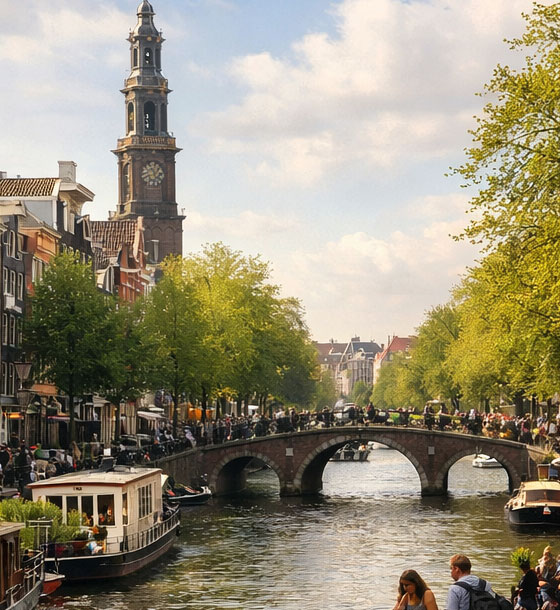
It is one of Amsterdam’s liveliest and most character-rich canal streets, famed for its length, variety and intense sense of everyday city life. As one of the longest canals in the city, it passes through several districts which entwine historical sites with residential areas and cultural venues. Such movement and change give Prinsengracht an energy at once dynamic but sensual.
Houseboats dot the waterline, lending some much-needed personality and lived-in charm. Cafes and hole-in-the-wall restaurants spill out onto the pavement, buzzing with the murmur of voices and people milling past. Low bridges span the canal at intervals, providing a range of perspectives — grand vistas at one moment, and intimate views framed by arches in the next. Each bend of Prinsengracht has its own small, marked personality and invites a little meandering without urgency.
Strolling down Prinsengracht is personal and unfiltered. It's the kind of spot where residents go about their daily business, visitors stop to stare, and the pulse of the city plays out as it should. There’s no whiff of performance here — only an ongoing flow of life moulded by water, architecture and the human presence. This is what makes Prinsengracht one of the most captivating streets to walk down -- a real slice of honest-to-God Amsterdam, not something that's put on for show.
Keizersgracht
Keizersgracht is distinguished by its wide, palatial feel and sense of tranquillity. It is the broadest of Amsterdam’s major canals, and its long, unbroken sightlines help the city feel open and in balance. Walking feels open, generous and unrushed here, a lot of space to take people in without the feeling of being closed in found on narrower streets.
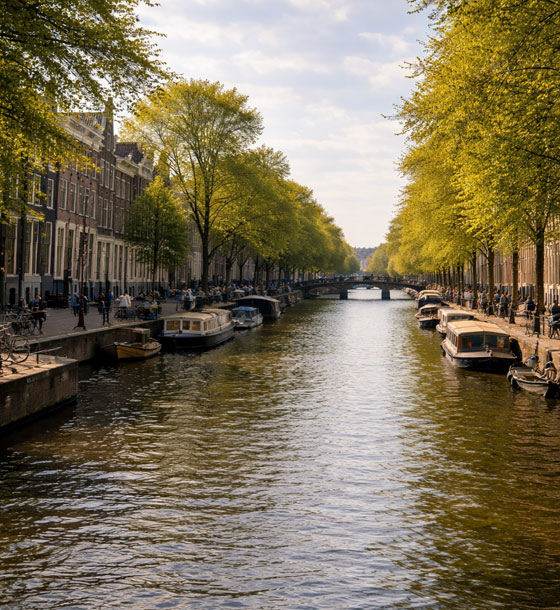
Banks of trees along the canal partially obscure the sights and soften lines, providing a natural rhythm for walking. They provide shade and tranquillity during the day, but also striding behind them are the old buildings, standing there as though framed. There’s something about the blend of water, greenery and handsome facades that is pacifying and restorative – a place to slow down and idly watch events unfolding.
In the evening, Keizersgracht is very quiet. The light dims softly on the water, reflections lengthen, and movement around the canal slows. The vibe transitions seamlessly from bustling to leisurely, so it’s the perfect end to a lazy afternoon stroll that turns into nighttime plans. It’s the sort of street where the day stops, piggybacking you from adventuring back toward a warm dinner and bed.
Singel
Singel is the oldest of Amsterdam’s major canal streets and was originally the city’s moat, marking its medieval perimeter before expansion projects created the iconic canal ring. This history imbues Singel with a personality all its own — smaller and cosier than its sibling canals but character-laden and rich with detail. Walking here is intimate, at times even personal; the canal flows just deep enough in a basin that’s as snugly arranged within its surrounding streets and buildings.
Singel is the epitome of everyday charm. Book markets, flower stalls and modest shops enliven things with their colour and movement in places; old buildings edge the water in a serene expression of continuity. The vibe is relaxed and unchallenging, so it's easy to sit and read or people-watch as the city goes by. It provides a soft introduction to Amsterdam’s canal life, revealing that history and daily reality coexist without formality.
Singel has a natural connection to the city centre, offering a bridge between Amsterdam’s history and its current energy. It pulls walkers toward the centre, guiding them easily into central streets, squares and evening destinations.
Herengracht, Prinsengracht, Keizersgracht and Singel Are the Backbone of Walking in Amsterdam. Together, Herengracht, Prinsengracht, Keizersgracht and Singel are the backbone of Amsterdam. They all have a different character–formal, spirited, epicurean or intimate–and yet lead into one another effortlessly in such a way that you can make your way through them gradually as the day progresses. As discovery evolves into familiarity, and pace slows toa slaketime tick-tocking promise of a laid-back, weary-satisfying evening, breaking bread at Samrat Indian Restaurant is given the deserved feel of being both a natural stop, and ending perfectly.
Quiet, Scenic Streets and Hidden Corners
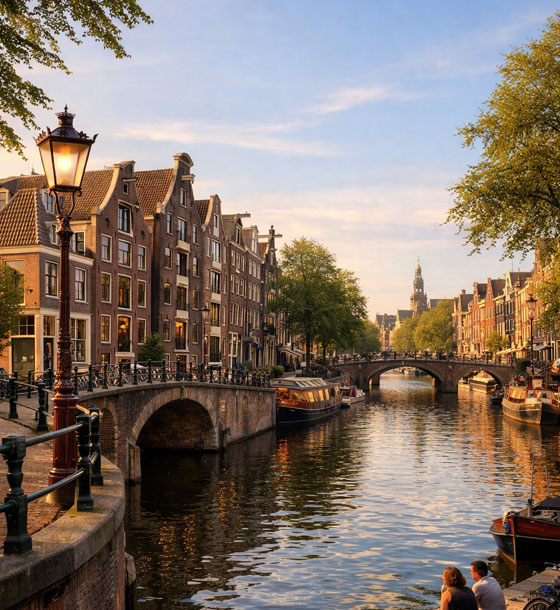
Beyond the main canal belt, Amsterdam reveals some of its most beautiful moments on quieter streets. These routes are perfect for slowing down, taking photographs, and enjoying the city away from crowds.
Brouwersgracht
Brouwersgracht is widely known as one of the most beautiful streets in Amsterdam, renowned for its width and tranquillity. Once lined with warehouses filled with goods during the city’s commercial heyday, the buildings along the canal have now been converted into unique homes. It’s this combination of sturdy industrial architecture and residential life that gives the street a harmonious tint. The water is reachy and open, the bridges creating views ideally meant for taking one’s time rather than passing through.
There is a beauty in strolling the Brouwersgracht. There’s room to breathe, to look across the canal and marvel at how Amsterdam’s commercial past quietly grew into everyday life. The street has a settled, confident assuredness and provides a calm contrast to the busier parts of the city.
Leliegracht
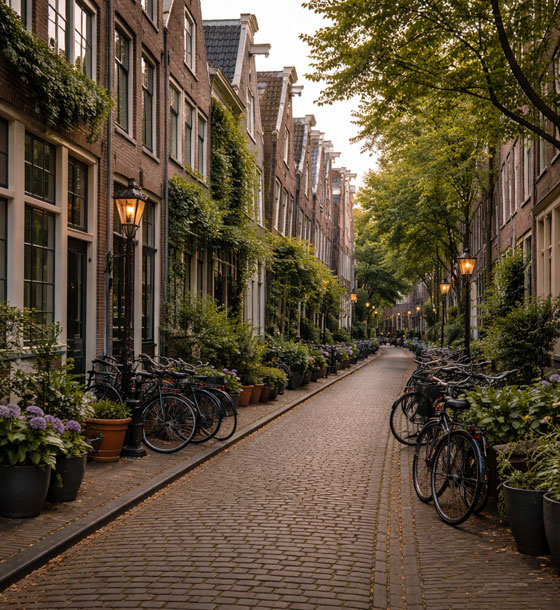
Leliegracht is a narrow street, quiet and deeply atmospheric. On either side, signs of the archipelago’s history are in place; traditional canal houses crowd up against each other, giving the impression of proximity, almost enclosure, which only makes it more beguiling. Flowering plants and greenery complement the brick façades during warmer months, bringing colour and life to the street. There’s a sense of being hidden here, as if found instead of visited, which is perfect for slow walking and quiet contemplation.
Time feels different here. The street is a place for standing still and watching, a quiet interstitial pause inside the larger tempo of the city.
Leidsegracht
Leidsegracht is where the big canals meet, and it's calm and unassuming. The gentle curves and changing sightlines make walking here quietly compelling, with views evolving gradually as you move along. Even as it joins busier locales, the canal maintains a calm, relaxed atmosphere.
Leidsegracht is a good midway — we can go from busy hustle-bustle, with the many things to see on the street, to a peaceful environment without an abrupt switch in mood.
Groenburgwal
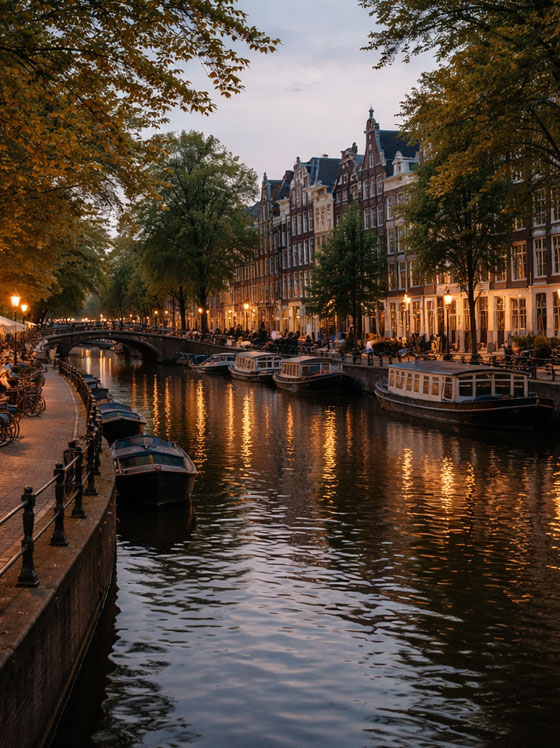
Groenburgwal is considered one of the most picturesque streets in Amsterdam and is famous for its postcard views and beautiful bridges. The canal is cosy, intimate and timeless, attracting photographers, couples and quiet observers alike. The reflections in the water and the perfect symmetry of everything around it make for an almost cinematographic scene.
Walking here encourages pause. It’s a place to halt, look and feel the stillness — a reminder that some of Amsterdam’s most impactful moments are the quiet ones, not the busy ones.”
Zwanenburgwal
Zwanenburgwal meanders through a neighbourhood with an illustrious past: it was previously home to artists, academics and scholars. With its curved form and quiet ambience, the canal has a meditative aspect. The upscale, moderate pretensions of the surroundings are deliberative and sobering — a slower pace that is starkly different from those busier streets nearby.
The walk along Zwanenburgwal is like a brief detour into an older Amsterdam — one of contemplation and continuity, rather than urgency.
And poking around these relatively quiet neighbourhood streets can leave one with a soft, simmering hunger — not only for food but also for warmth and comfort and rest. At the end of a peaceful day filled with slow walks and moments of contemplation, an evening meal is particularly welcome as it provides a fitting conclusion to the experience.
The Historic Streets of Old Amsterdam
Amsterdam’s oldest streets reveal the city’s medieval origins. Narrow, atmospheric, and rich in history, these routes show how the city first developed around trade, religion, and daily life.
Oudezijds Voorburgwal
Oudezijds Voorburgwal passes through one of the oldest and most historically evocative parts of Amsterdam, with a straight-line history that leads directly back to the city’s very beginnings. The canal is surrounded by centuries-old churches and historic buildings and narrow side streets that reflect Amsterdam’s origins. Walking here is immersive and layered, as if history were built into each step. That interplay of architecture, water and street life gives the place a feeling that’s full of narration and memory.
Oudezijds Achterburgwal
Parallel to the Voorburgwal, Oudezijds Achterburgwal exposes a different side of old Amsterdam. Its appearance is less uniform, reflecting how the city has expanded in response to trade and population growth and social change. The street maintains its original characteristics, but has been re-used over the ages, says Rafi Segal: it demonstrates how Amsterdam keeps reinventing itself without compromising on urban structure. Walking here is a reminder of the city’s resourcefulness and accommodation.
Grimburgwal
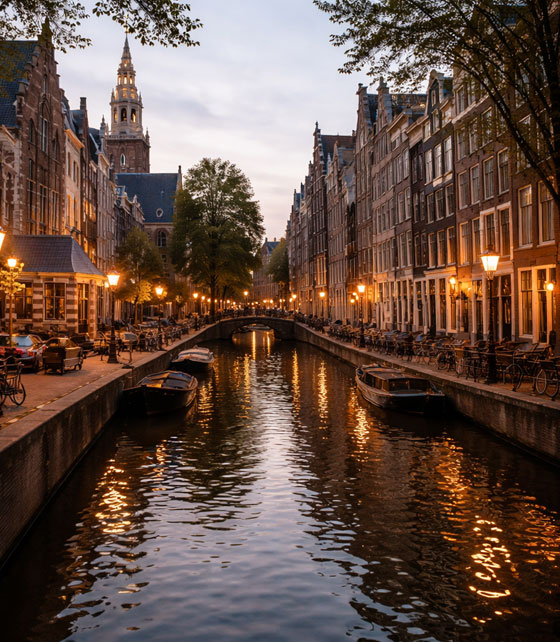
Grimburgwal is among the oldest and most intimate of Amsterdam’s canals. Small and tucked off main roads, it is easy to overlook. Those who find it are rewarded with a hushed, almost whispery feel. That narrow canal, the nearly touching buildings, and the quiet surroundings make walking along Grimburgwal feel like a discovery; an intimate chapter of history that has been silently observed by many but seldom told.
As the day winds down, that sensibility craves a place to rest. Slowing down to sit while the impressions of the day settle seems equally important as the walk itself. And finishing the evening at Samrat Restaurant is just that kind of comfortable finish, where history on foot can be appreciated in a down-but-not-dirty way. It is where adventure fades into serenity, and the depth of Amsterdam’s history can best be experienced while relaxed at night.
Eastern Routes and Streets of Trade
Moving eastward, Amsterdam’s streets reflect its history as a global trading city. These routes are broader, more open, and closely tied to shipping, warehouses, and commerce.
Schippersgracht
The Schippersgracht is a direct connection between Amsterdam’s old centre and its eastern neighbourhoods—a testimony to the city’s historical affiliation with trading and transportation by water. Its name, “Skippers’ Canal”, suggests its marine history of being used for both ships and goods from around the world competing to make their way through the canal. The view along Schippersgracht is long and linear, giving a sense of direction and movement. The canal has purpose and openness, marching us inexorably through while showing how water once organises the course of commerce and daily life.
Nieuwe Herengracht
The atmosphere of Nieuwe Herengracht is calmer and more residential than the busy canals in the central ring. It runs close to culturally and historically significant spots, but it feels dignified and composed rather than busy. The streets around it are quiet, giving this part of the waterfront a sense of contemplation and reflection. The canal provides a respite within the city, with that space, water and architecture combining for an environment conducive to slow looking.
Nieuwe Vaart
At Nieuwe Vaart’s width and functionality, you can read Amsterdam’s industrial and trading history. Wider than most urban canals, it was made for travel and trade, not for show. Walking along Nieuwe Vaart feels vast, with open views and such spaciousness that it stands in stark contrast to the tight streets and intimate canals of the old city. It underscores another chapter of Amsterdam’s growth — one defined by logistics, industry and outward expansion.
Sarphatistraat Canal
The Sarphatistraat canal runs along one of these important routes in Amsterdam, where infrastructure is mixed with scenic views in a practical (but not crass) manner. It demonstrates how Amsterdam’s canals are not isolated elements but a buried, integrated part of the city. Walking here is the clearest demonstration yet of the function and beauty of a canal, in which moving traffic, water management and urban life all come together without apparent effort.
Entrepotdok
Entrepotdok is framed by historic warehouses, where goods from all over the planet were once stored, thus serving as a vivid reminder of Amsterdam’s global trade heritage. Now the area feels open, serene and welcoming. Broad walking paths and broad water views promote longer, more strolls that give you time to take in the scale and history of the surroundings. The development of this district from storage base to serene waterfront is one more sign that the city can change without losing its sense of itself.
Browsing these eastern routes expands a day of walking in Amsterdam. They also expose a side of the city that was formed by trade, industry and innovation — less decorative than the central canals, but equally crucial when it comes to understanding how Amsterdam developed, worked and continues to develop.
Waterfront Roads and Harbour Views
Amsterdam’s streets do not stop at canals. Rivers, harbours, and waterfront roads expand the city’s
landscape, offering wide horizons and a sense of openness.
Wittenburgergracht
Wittenburgergracht cuts through former docklands where Amsterdam’s shipping history meets sensitive modern redevelopment. Historic industrial buildings rub shoulders with newish residential and cultural space in the layered neighbourhood, a reflection of the city’s current iterationnish transformation. Visiting on foot yields a clear picture of how Amsterdam changes through time, choosing to retain its fluid association with water while redefining what it means for life today. There’s an open, forward-looking atmosphere here without that cutting-off-the-past edge.
Oostenburgergracht
Oostenburgergracht reflects this sense of evolution, where strong maritime references combine with the everyday modern city. The canal, which is wide and fairly still, offers a sense of some breathing room from the surrounding streets. But a walk along the Oostenburgergracht is relaxed and footsure, giving you the chance to appreciate both the historical scale of the area and its repurposing for modern living and working.
Kattenburgergracht
Kattenburgergracht is deeply connected to the naval history of Amsterdam, and it has kept a tranquil, down-to-earth feel. With calm waters, broad paths to accommodate the foot-traffic and space for comfort behind its edges, there is no better spot to take a reflective walk, no more so than in the late afternoon when the city starts to wind down just a little. The canal is purposeful but peaceful, a space for reflection and observation without interruption.
Westerkanaal and Westerhaven
Westerkanaal and Westerhaven tell stories about the industrial era and the harbour in Amsterdam. These paths seem a world away from the bustle of the city centre, and have open water views and clean air. And walking here provides a sense that you’re well clear of the crowds, the better to let your eye concentrate on this expanse of water and its spartan surroundings. The ones I come through, moments later, are quiet and big and somber in a way that lingers in your head long after the internet’s forgotten you.
IJ River
İJ River sets the boundaries of Amsterdam’s north and adds a jarring contrast to the intimate canal streets found in the old city. The enormous water and the stretch of sky provide a sense of space and freedom, while ferries, modern architecture and creative areas along the shorelines reveal another side to Amsterdam. To walk near the IJ is to experience a breath of fresh air, and space — for it’s here one senses how Balancing Act City has reconciled its historic core with an evolving, modern identity defined by water.
By the time this transition occurs, there is a sense of enough and the day’s exploration is done. The body is tired, the mind full of impressions etched by water and space and history. The down comfort of Samrat Indian Restaurant seems the logical destination. The peace derived from strolls along the water is preserved inside, transforming a day of wandering and exploration into an evening of ease, comfort, and hard-earned repose.
Bringing Every Route Back to Amsterdam Centrum
No matter which paths you follow during the day—the grand canal ring, hidden historic lanes, quieter residential streets, or wide waterfront routes—Amsterdam has a natural way of drawing you back toward its centre. The city is designed like a web, with canals, bridges, and streets gently guiding movement inward. Amsterdam Centrum becomes the natural conclusion to a day of walking, where exploration comes full circle, and the pace begins to soften.
Bethaniëndwarsstraat, located close to Dam Square and major canal routes, is especially convenient for visitors returning from anywhere in the city. Whether your day has unfolded along Herengracht, through the quiet beauty of Groenburgwal, across the open spaces of Entrepotdok, or beside the expansive IJ River, reaching this area feels effortless. Routes connect smoothly, making the return feel intuitive rather than planned.
As evening settles in, the atmosphere of the centre changes. The daytime energy gives way to a calmer rhythm—streets grow quieter, lights reflect softly on nearby canals, and movement slows to an easy, comfortable flow. It is no longer about getting somewhere, but about being present. In this setting, sitting down for dinner feels well-earned rather than rushed. Ending the day at this Indian Restaurant fits naturally into this moment, offering a warm and relaxed space where a full day of walking, discovery, and impressions can finally settle into comfort.
Why Walking Amsterdam’s Streets Makes the Evening More Special
Ambling the streets of Amsterdam just feels right in a way that is very sensory and balanced. The soft gurgle of water lapping against the canals, the steady percussive beat of footsteps across bridges, and always changing scenes mixtures of streets and façades and reflections provide a soothing experience. Nothing demands your attention all at once; the city unfolds for you, and in so doing challenges you to remain present and observant.
This slowdown of pace changes the feel of our days. Instead of ticking off sights, walking promotes a more deep-down kind of sightseeing. You start to see patterns, moods and little things – the light on brickwork, how neighbourhoods ease from one canal to another and how history is mastered so easily by daily life. It’s an intimate experience, not a performative one.
By the end of the day:
- You delved, rather than rushed; you let places make an impression.
- You’ve seen the city from crowded sidewalks and sleepy waterways
- You’re both physically and mentally prepared to settle down and relax
Tonight, this evening feels particularly significant. Sitting is a punctuated part of the journey, not a break from it. A sit-down meal is the obvious conclusion to a day of questions and answers, endless movement: an opportunity for impressions to solidify, for conversations to flow more fluidly, for the events of the day to harden into memories that linger beyond those coupleof steps back home.
A Perfect Ending to a Day on Amsterdam’s Streets
The streets of Amsterdam are not just thoroughfares but also storytellers. And each meander adds a layer to the day, from Herengracht’s stately elegance and the vibrant, lived-in bustle of Prinsengracht to Leliegracht’s hushed charm and the wide-open tranquillity of IJ River. Together, they give one a sense of such a pedestrian-friendly city — where history, daily life and getting around blend organically into one seamless experience.
After all that walking, seeing and soaking up the city’s many moods, a final meal of the day in Amsterdam Centrum brings symmetry. The transition from exploration to repose makes sense. Streets quiet, conversations decelerate and the attention shifts from the outward — finding the city — to comfort, connection.
Whether the day has been spent meandering canals in the historic heart, exploring unfamiliar streets or admiring vast waterfront panoramas, the end feels right. Samrat restaurant Getting a seat in Samrat Restaurant brings with it this last sense of closure; that warm, homey space at the heart of the city where all impressions from that day can rest. It’s a perfect placeholder at the end of a day full of navigating through Amsterdam’s streets, taking exploration and turning it into reflection, movement into memory.